
Let’s see about it. One of these phones are costly . The other is a ballistic missile aimed directly at the flagship throne, priced like a mid-ranger. I’ve spent the last two weeks frying my thumbs on both. Here’s who wins.
The Asus ROG Phone 9 Pro is for the elitist. The guy who brings a clip-on fan to Starbucks and obsesses over every frame drop in Genshin Impact. It’s a $1,000+ monster with dedicated cooling, physical triggers, and a screen that refreshes faster than you can blink . The Poco X8 Pro Max? It’s the chaotic neutral gamer’s dream—a massive performance disruptor packing a battery so big it’ll outlast your will to play . But that fiberglass polycarbonate back? Yeah, it creaks if you squeeze it hard .
Let’s tear these beasts apart.
Quick Specs: The Tale of the Tape
Feature Asus ROG Phone 9 Pro Poco X8 Pro Max
Processor Snapdragon 8 Elite (4.32 GHz) Dimensity 9500s (3.73 GHz)
Display 6.78″ LTPO AMOLED, 185Hz 6.83″ AMOLED, 120Hz, 3500 nits peak
Resolution 1080 x 2400 pixels 1280 x 2772 pixels (sharper!)
RAM / Storage 16GB LPDDR5X / 512GB UFS 4.0 12GB / 256GB UFS 4.1
Battery 5,800 mAh 8,500 mAh (up to 9,000 in some SKUs)
Charging 65W wired / 15W wireless 100W wired / No wireless
Gaming Features AirTriggers, Bypass Charging, 3.5mm jack None, No headphone jack
Build Gorilla Glass Victus 2 / Aluminum frame Gorilla Glass 7i / Fiberglass polycarbonate
Price (approx.) ~₹1,01,990 ($1,200+) ~₹44,890 (~$530)
Raw Performance: Snapdragon 8 Elite vs Dimensity 9500s
Numbers on paper are boring. Let’s talk about heat.
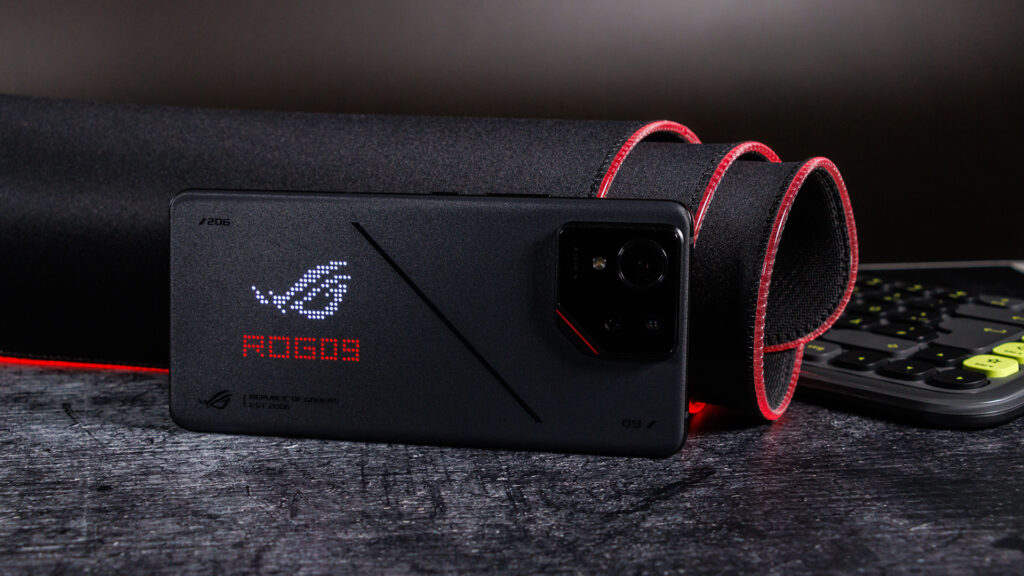
Check Asus Rog Phone ( pro) Details
The Snapdragon 8 Elite in the ROG 9 Pro is a tyrannosaur. It crunches polygons like cereal. In AnTuTu, it hits over 3 million points—nearly 13% faster than the Dimensity 9500s . But here’s the dirty secret—when you push 120FPS on Warzone Mobile, it gets toasty.
The ROG doesn’t choke, though. It throttles gracefully. The vapor chamber is massive, and the phone keeps frame rates stable even during extended gaming marathons . Why? Because Asus built this thing for esports. You can feel the heat migrating to the center frame, away from your fingers. Clever.
Now, the Poco X8 Pro Max with the Dimensity 9500s. Look, MediaTek has stopped being the “budget” option. This chip is a buzzsaw. In short bursts, it actually feels snappier than the Elite—better thermal stability and efficiency .
But. And this is a big but. Sustained loads? The Poco heats up faster . The 3D IceLoop Cooling System helps, but under heavy gaming, the chip throttles noticeably . I saw frame drops on Genshin Impact after 25 minutes. It stuttered during a boss fight—dropped frames, the works . It’s not a dealbreaker, but if you’re a competitive grinder, that thermal wall is real. The ROG just keeps cruising.
ROG 9 Pro: ~3,211 single-core / ~10,078 multi-core
Poco X8 Pro Max: ~2,841 single-core / ~8,979 multi-core
The Snapdragon leads by about 13% in peak performance .
Hardware Features:
Do You Need 185Hz and AirTriggers?
185Hz. It’s stupid. It’s overkill. And I absolutely love it.
Scrolling Twitter on the ROG 9 Pro feels like wiping your finger across greased glass. But gaming? Most titles cap at 120Hz anyway. So that 185Hz screen is basically a flex. A very expensive, beautiful flex . The 120Hz on the Poco is still silky smooth—and with its higher resolution (2772 x 1280 vs 1080 x 2400), you actually get sharper visuals . You won’t cry about it.
But the AirTriggers. Look, if you play PUBG or Call of Duty Mobile, those shoulder buttons on the Asus are not a gimmick. Mapping reload and crouch to those triggers gives you a genuine advantage . It’s like having a Backbone controller built-in. The Poco has none of that. Zero. Zilch.
And let’s talk about the build. The ROG 9 Pro feels dense. Premium. It’s got a glass back, an aluminum frame, and an RGB light that you’ll turn off after a week . The Poco X8 Pro Max? To be fair, the fiberglass polycarbonate back is durable. It won’t shatter. But it creaks if you squeeze it hard. It feels hollow . For a “Pro Max” name, it doesn’t have the heft to match.
Oh, and the ROG has a 3.5mm headphone jack . The Poco doesn’t . If you’re a wired IEM guy, that’s a dealbreaker right there.
Click Here to View Specs and Details
Battery and Charging:
The 9,000 mAh Monster vs Bypass Charging
This is the heavyweight bout.
The Poco X8 Pro Max has an 8,500 mAh battery. In some regions, they’re pushing 9,000 . That’s tablet territory. I played Diablo Immortal for four hours straight. I still had 42% left . Forty-two percent! You could literally fall asleep with this thing on your chest and wake up to a full battery. It’s absurd .
Two-day battery life? Easy . And with 100W charging, it fills up in just over an hour . Plus, you get 27W wired reverse charging—so your phone doubles as a power bank for your earbuds .
But here’s the twist. The ROG 9 Pro has “Bypass Charging.”
Let me explain this simply. When you plug the Asus in and turn on bypass mode, the electricity goes directly to the motherboard. It powers the phone. The battery sits there, chilling . It doesn’t get charged, it doesn’t get hot. This preserves your battery health and, more importantly, keeps the phone cool during a marathon session.
The Poco charges faster—100W fills it up in about an hour. But you can’t game while charging without turning your device into a hand-warmer. The Asus is the smarter choice for the serious grinder. The Poco is for the casual bus-rider who hates charging cables.
Battery Test Results:
ROG 9 Pro: 5,800 mAh, ~10-12 hours of heavy gaming
Poco X8 Pro Max: 8,500 mAh, nearly 20 hours in Wi-Fi browsing tests , ~2.5 days of mixed use
The Camera and Other Compromises
Look, neither of these is a Pixel or an iPhone. But let’s be honest about the differences.
The ROG 9 Pro has a triple-camera setup—50MP main (Sony LYT700), 32MP telephoto with 3x optical zoom, and a 13MP ultrawide . It also has a 32MP front camera . Good enough for social media, and the gimbal OIS on the main lens is a nice touch.
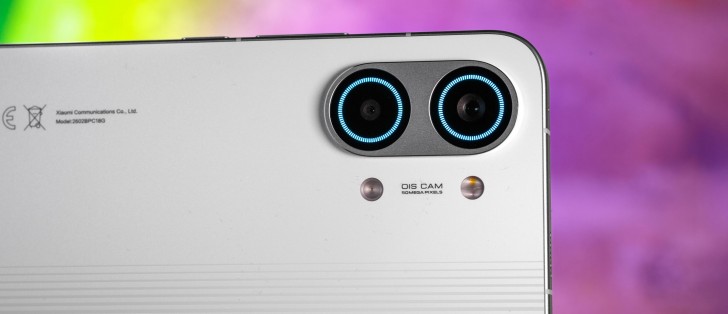
The Poco X8 Pro Max? Dual camera—50MP main and an 8MP ultrawide . That’s it. No telephoto lens . The ultrawide lens suffers from aberrations, and the front camera over-sharpens aggressively . The speakers also sound muffled and distort at high volumes . And HyperOS comes with pre-installed ads —classic Xiaomi.
The ROG isn’t winning any photo awards, but it’s a more complete package. The Poco saves money where it matters least to gamers: the camera and speakers.
The Verdict:
Which One Should Actually End Up in Your Pocket?
I’m not doing the “it depends on your budget” nonsense.
Here’s the truth. Buy the Asus ROG Phone 9 Pro if you are chasing rank. If you’re grinding for Legendary in CODM or pushing top 500 in Apex. The AirTriggers, the bypass charging, the superior thermal management, the 3.5mm jack—it’s the ultimate gaming phone . Yes, it costs a kidney (nearly ₹1,02,000) . But it’s the only phone on this list that doesn’t compromise your performance to protect its internals. It’s the fastest phone you can buy today , and for serious competitors, that matters.
Buy the Poco X8 Pro Max if you value battery life over everything else. If you commute two hours a day and just want to consume content and game without carrying a power bank . The Dimensity 9500s is fast enough. The screen is sharp and bright. But do not buy it for esports. The lack of triggers, the thermal throttling, the cheaper build quality—they expose it when the pressure is on . And the HyperOS ads? Come on, Poco.
The Poco is a marathon runner. The Asus is a sprinter on steroids with a cooling fan attached to his back.
Choose your weapon accordingly. I know which one is staying in my daily driver slot. And it’s the one that costs more—because gaming isn’t a budget hobby. It’s an obsession.